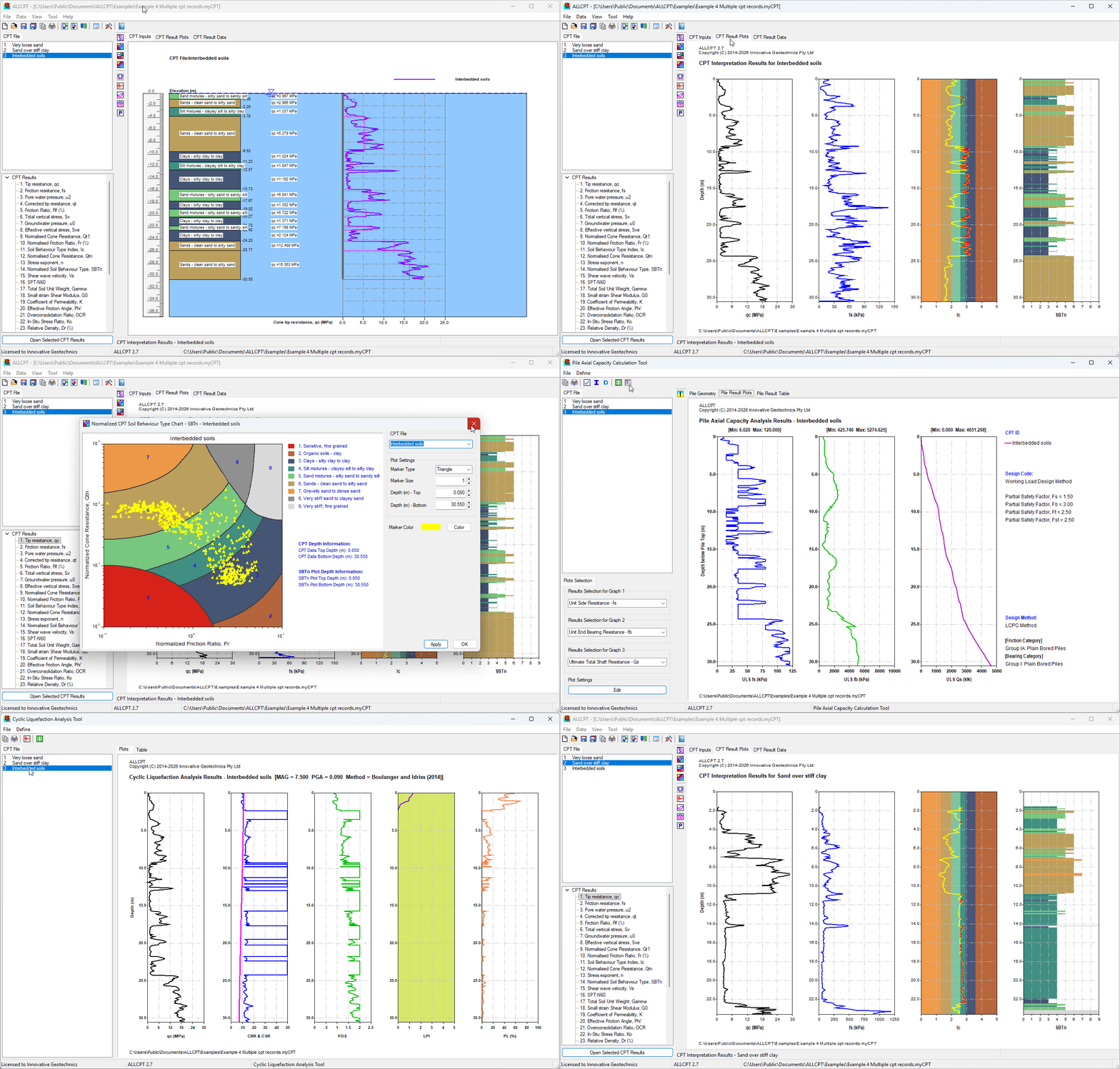
ALLCPT - CPT Data Interpretation Tool
ALLCPT is a comprehensive Cone Penetration Test (CPT) data interpretation and analysis tool that provides an integrated workflow from raw CPT data to practical geotechnical design.
The program enables users to import and process CPT data, interpret soil behaviour and stratigraphy, estimate a wide range of geotechnical soil parameters, and automatically identify potential soil-layer boundaries. Interpreted results can be reviewed and presented in both tabular and graphical formats.
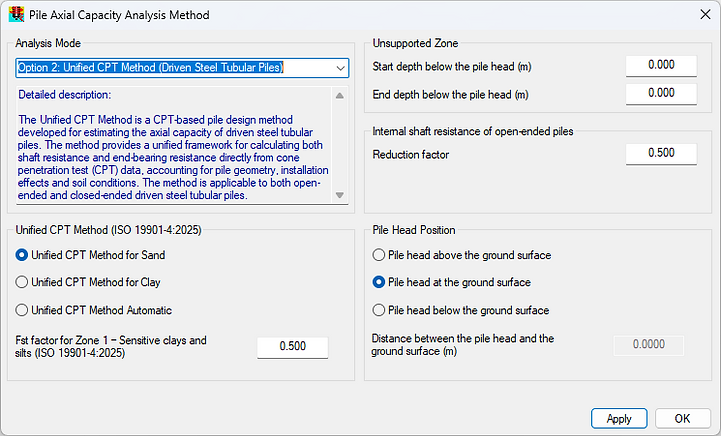
Beyond CPT interpretation, ALLCPT also integrates CPT-based pile axial capacity and settlement analysis, including the Unified CPT Method in accordance with ISO 19901-4:2025, the LCPC method, and CPT-based methods for CFA and bored piles.
From CPT data interpretation and soil profiling through to practical pile foundation assessment, ALLCPT brings key CPT workflows together in one program.
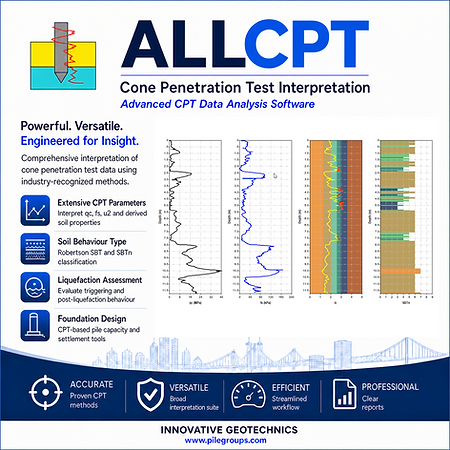
Fast and efficient importing of CPT data in different formats
A wide range of CPT raw data files are supported in ALLCPT program and can be imported and processed. The supported file formats include *.TXT, *.DAT, *.GEF, *.CSV and *.COR.

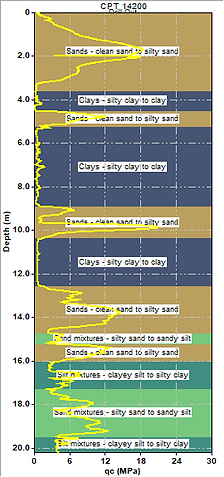
Innovative Automatic Soil Layer Identification
ALLCPT introduces an innovative rolling-median method for automatically identifying potential soil-layer boundaries from changes in the Soil Behaviour Type Index (Ic). By comparing median Ic values within depth windows above and below each trial depth, the method detects significant transitions while reducing sensitivity to local spikes and measurement noise. This provides a robust, efficient and practical approach to generating soil-layer profiles directly from CPT data.


Simple program layout for CPT interpretation result plots and CPT data
Various CPT interpretation result plots are presented in the main chart area. The individual plot can be selected by the users. The detailed CPT data are presented in the table below the main plot. Multiple CPT files are managed in the section of "List of CPT Data". In total, more than 30 different soil parameters are interpreted and presented.

Easy view for multiple CPT interpretation result plots
It is very simple and easy to plot multiple CPT interpretation results in ALLCPT for various parameter estimations.

Cyclic Liquefaction Analysis Tool
ALLCPT presents a cyclic liquefaction analysis tool to assess the liquefaction potential due to cyclic loading

Pile Capacity Analysis Design Tools
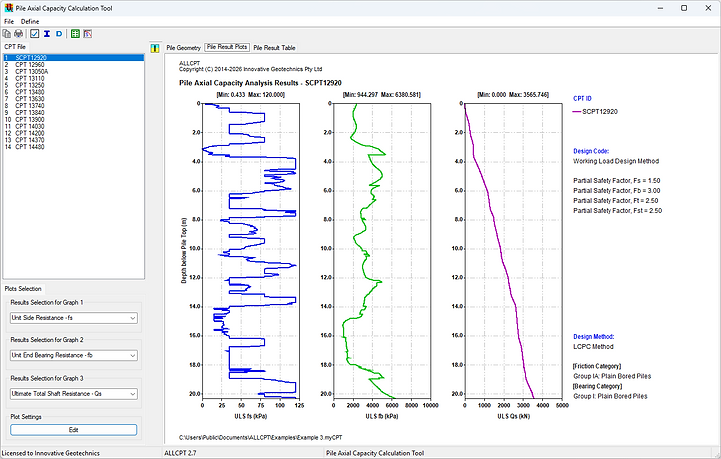
Pile capacity analysis is based on three methods: (1) the LCPC method, (2) the Unified CPT Method for driven steel tubular piles (ISO 19901-4:2025), and (3) the CPT Method for CFA and bored piles. Pile settlement analysis for multiple pile lengths is based on Fleming’s approach.

Pile settlement analysis for multpile pile lengths
ALLCPT provides pile settlement analysis for multiple pile lengths based on Fleming’s method, allowing users to efficiently assess how pile length influences the load–settlement response.
Multiple trial pile lengths can be analysed in a single run, with the calculated settlement responses presented graphically for easy comparison. This provides a practical tool for evaluating pile performance, comparing alternative pile lengths and supporting preliminary pile length optimisation directly from the CPT-based design workflow.

Pile Axial Capacity Design Code
ALLCPT currently supports the following design codes:
(1) Working load design approach
(2) AASHTO (American Association of State Highway and Transportation Officials)
(3) Eurocode 7 - UK (DA1)
(4) Eurocode 7 - (Others)
(5) Australian Standard AS 2159 - 2009
(6) Eurocode 7 - Singapore National Annex
(7) Eurocode 7 - Malaysia National Annex

Static Liquefaction Analysis Tool
Liquefaction can occur due to two reasons: first, due to cyclic loading where the effective pressure on top can become zero during the loading process, and second, due to loss of shear strength caused by strain softening, which is known as flow or static liquefaction (Robertson 2006, Jefferies and Been 2006).
ALLCPT program provides a flow liquefaction analysis tool which can be used to assess the liquefaction potential based on the imported CPT data.

Export into Plaxis CPT Input File Format
The imported CPT file can be exported into Plaxis CPT input file format and therefore the soil layers can be easily created in Plaxis model based on the CPT records.


Soil Behaviour Type Plots
Soil behaviour type plots such as SBTn (Robertson, 2009), Modified SBTn (Robertson, 2016) and Q(1-Bq)+1 versus FR plots (Jefferies and Been, 2006 and 2015) are available in the program.


This example demonstration shows how quickly CPT results can be processed and visualized — helping engineers move from field data to design-ready insights in record time.